Pallet buying guide
New vs. Recycled Pallets: What Commercial Buyers Should Consider
By Gulf Coast Pallet LLC · · 6 min read
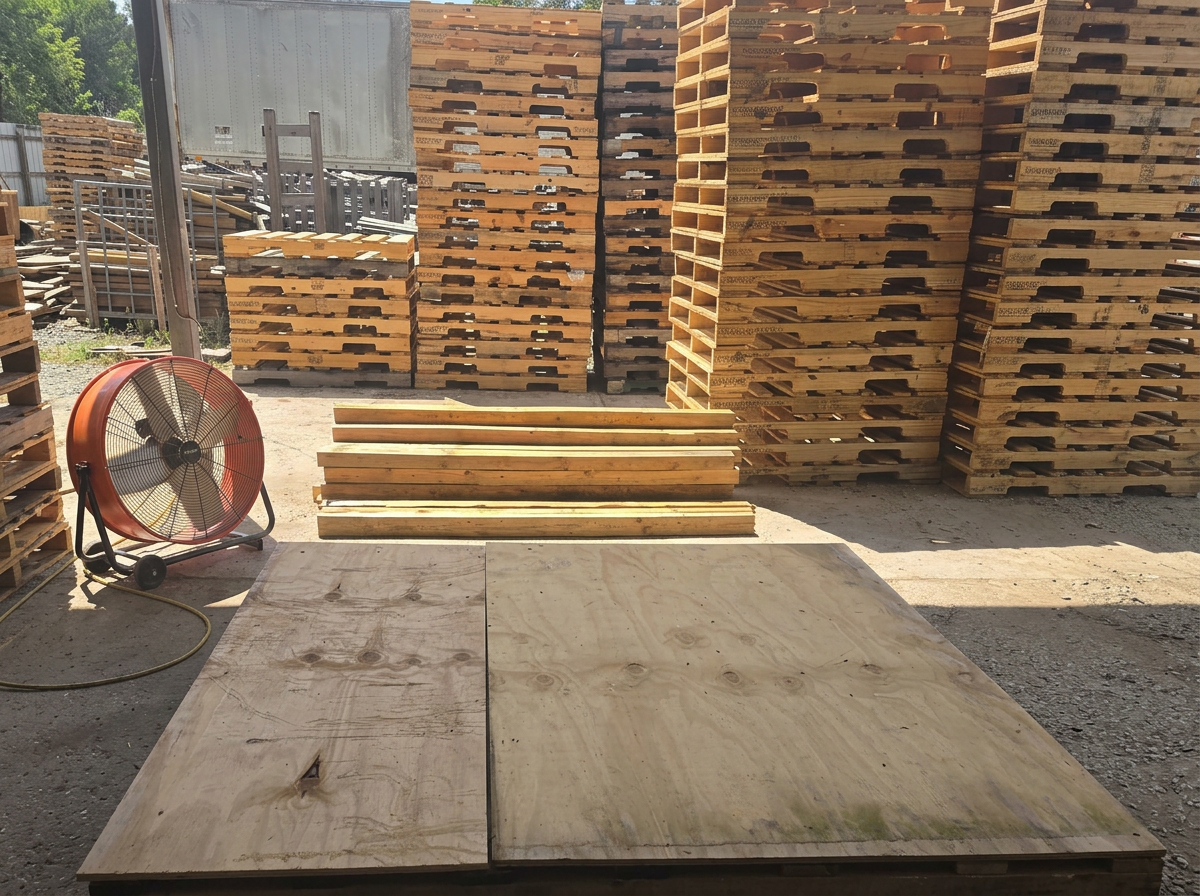
Most commercial operations use some mix of new and recycled pallets. The question is not which is better in general, but which fits each flow of product through your building. Here are the factors purchasing and warehouse teams usually weigh.
What "recycled" means
Recycled pallets are used pallets that have been collected, sorted and, where needed, repaired. They are typically sold by grade. Grade A pallets are generally cleaner and built with original components. Grade B pallets have been repaired — for example with replaced boards or reinforced stringers — and are commonly used for internal handling and general freight.
New pallets are built from new lumber to a defined size and construction, which makes them the natural choice when you need a non-standard footprint or a specific build.
Where does the pallet go after it leaves your dock?
This is usually the deciding question.
- Internal moves and storage: recycled Grade B is often adequate.
- Outbound shipments to customers: Grade A recycled or new, depending on what the receiver accepts.
- Customers with written receiving specs: follow the spec — some require new pallets or a particular build.
- One-way shipments that never come back: many buyers choose recycled to avoid sending new pallets out the door.
Consistency
Automated equipment, conveyors and tight racking tolerate less variation. New pallets built to one specification are the most uniform. Recycled pallets of the same grade are sorted for consistency, but they come from many sources, so small differences in board appearance and repair style are normal. If your line is sensitive, say so when you request a quote.
Size and construction
Recycled supply is strongest in common sizes, especially the 48×40 GMA-style stringer pallet. Odd sizes, special deck layouts, block construction and heavy-duty builds are generally quoted as new or custom pallets.
Appearance and cleanliness
If pallets are visible to your customers, or if your products have cleanliness expectations, discuss them up front. Some operations specify new pallets for these flows; others accept Grade A recycled. Your customer's or quality team's requirements should drive the choice.
Export shipments
Pallets shipping overseas may need to be heat treated under international wood packaging rules. Requirements depend on the destination and shipment, so confirm with your freight forwarder and mention export use when you request a quote.
Cost — looked at the right way
Recycled pallets are frequently chosen to manage spend, but compare total cost rather than per-unit price alone: rejected loads at a receiver, damaged product or equipment jams cost more than the pallet. Volume, grade, freight and schedule all affect what you pay; see how pallet pricing works for the full list of factors.
Using both
Many warehouses split their supply — new or Grade A for outbound customer shipments, Grade B for internal storage and moves. Buying both from one supplier keeps the specs, deliveries and contact in one place.
Ready for a quote?
Send your pallet spec, quantity and delivery ZIP code. Upload a drawing if you have one.